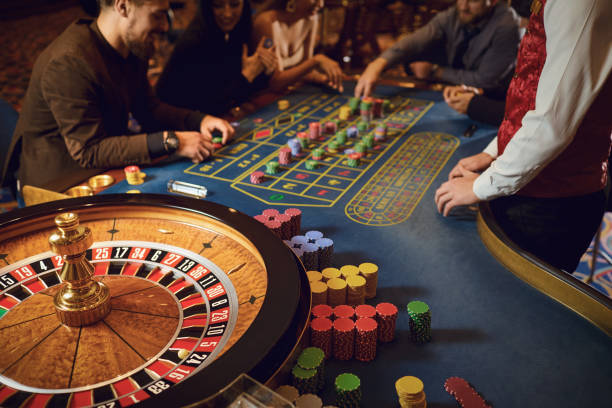
- Fortify Your Free Time with Timeless Thrills: Play a casino classic and experience winning like never before.
- Understanding the Enduring Appeal of Traditional Casino Games
- The Historical Roots of Popular Casino Classics
- The Strategy Behind Blackjack
- Roulette: A Game of Chance and Tradition
- The Evolution of Classic Games in the Digital Age
Fortify Your Free Time with Timeless Thrills: Play a casino classic and experience winning like never before.
The allure of the casino classic has captivated individuals for generations, offering a unique blend of excitement, strategy, and the potential for significant reward. These timeless games, often rooted in history and tradition, continue to draw players with their simple yet engaging mechanics. From the spinning wheel of roulette to the strategic depth of blackjack, these classics embody the essence of casino entertainment, representing a cornerstone of the industry and a source of enduring appeal for both novice and experienced gamblers. They offer a sense of nostalgia, a familiar comfort, and a thrilling experience that transcends fleeting trends.
Understanding the Enduring Appeal of Traditional Casino Games
The longevity of classic casino games isn’t accidental. It’s a testament to their carefully crafted designs and the psychological principles they utilize. These games tap into fundamental human desires: the thrill of risk, the satisfaction of skill, and the hope of fortune. They provide an escape from the mundane, a chance to test one’s luck, and an opportunity to experience the heady rush of winning. Unlike some modern games that rely on flashy graphics and complex rules, classics prioritize simplicity and direct engagement, making them accessible to a broad audience.
Furthermore, there’s a social aspect often associated with playing these games. Casinos, and increasingly online platforms, foster a sense of community; players interact with each other, share strategies, and celebrate victories together. This social element adds another layer of enjoyment to the gaming experience, transforming it from a solitary pursuit into a shared adventure.
| Blackjack (Optimal Play) | 0.5% | High |
| Roulette (European) | 2.7% | Low |
| Baccarat | 1.06% (Banker Bet) | Low |
| Craps (Pass Line Bet) | 1.41% | Medium |
The Historical Roots of Popular Casino Classics
Many of the casino classics we enjoy today have surprisingly rich histories. Blackjack, for instance, is believed to have evolved from a French card game called ‘Vingt-et-Un’ (Twenty-One) in the 18th century. Roulette’s origins can be traced back to France in the 17th century, with Blaise Pascal’s attempt to create a perpetual motion machine inadvertently leading to the game’s basic design. Baccarat, originating in Italy in the 15th century, gained popularity among European aristocracy before finding its way into casinos.
Understanding these historical roots adds another level of appreciation for these games. They aren’t simply products of modern entertainment; they are cultural artifacts, shaped by centuries of evolution and refinement. Their continued presence in casinos worldwide is a testament to their enduring appeal and their ability to adapt to changing tastes.
The Strategy Behind Blackjack
Blackjack, unlike many casino games, involves a significant element of skill. The game’s core objective, to beat the dealer’s hand without exceeding 21, requires strategic decision-making. Players can employ basic strategy, a mathematically derived set of guidelines that dictates the optimal play for every possible hand combination. Mastering basic strategy dramatically reduces the house edge, providing players with a genuine opportunity to improve their odds. Advanced techniques, such as card counting, build upon this foundation, though they are often frowned upon, and even prohibited, by casinos.
However, even without delving into complex strategies, blackjack offers a compelling blend of luck and skill. The ability to make informed decisions, to calculate probabilities, and to manage risk elevates it above purely chance-based games. It’s a game that rewards knowledge, discipline, and a cool head, making it a favorite among serious gamblers.
Successfully playing Blackjack relies on making informed decisions. A player must choose whether to ‘hit’ (take another card) or ‘stand’ (end their turn) based on the cards they hold, and the dealer’s visible upcard. Understanding the rules and probabilities, coupled with a sensible betting strategy, is key to enjoying the game and maximizing your chances of success.
Roulette: A Game of Chance and Tradition
Roulette, with its iconic spinning wheel and vibrant betting options, remains a perennial favorite among casino enthusiasts. The game is fundamentally based on chance, but the numerous betting possibilities allow players to tailor their risk tolerance and potential payout. From simple bets on red or black to more complex wagers on specific numbers or combinations, roulette offers a diverse range of options to suit every player’s preference.
The allure of roulette lies in its simplicity and the anticipation it generates. The spinning wheel, the clicking ball, and the collective breath-holding of the crowd create a palpable sense of excitement. It’s a game that appeals to those who enjoy the thrill of uncertainty and the possibility of a lucky break.
- European Roulette: Features a single zero, resulting in a lower house edge.
- American Roulette: Has both a single and double zero, increasing the house edge.
- French Roulette: Often includes rules like ‘La Partage’ or ‘En Prison’ that further reduce the house edge.
The Evolution of Classic Games in the Digital Age
The advent of online casinos has significantly broadened the accessibility of casino classic games. Players can now enjoy their favorite titles from the comfort of their homes, or on the go via mobile devices. Online platforms have faithfully recreated the atmosphere of traditional casinos, often incorporating realistic graphics, immersive sound effects, and live dealer options.
This digital evolution has also led to innovative variations of classic games. For example, live dealer blackjack allows players to interact with a real dealer via video stream, bridging the gap between the online and offline experiences. Online roulette often features faster gameplay and a wider range of betting options. These adaptations have reinvigorated classic games, attracting a new generation of players while preserving the core elements that make them so enduring.
- Increased Convenience: Play anytime, anywhere.
- Wider Game Selection: Access to a greater variety of classic games.
- Bonuses and Promotions: Online casinos often offer attractive incentives.
- Lower Stakes: Play with smaller bankrolls.
The future of these games is likely to involve further technological advancements, such as virtual reality and augmented reality, which will create even more immersive and engaging gaming experiences. However, the fundamental appeal of these classics – their simplicity, their strategic depth, and their enduring sense of excitement – will undoubtedly remain intact.